Key Takeaways
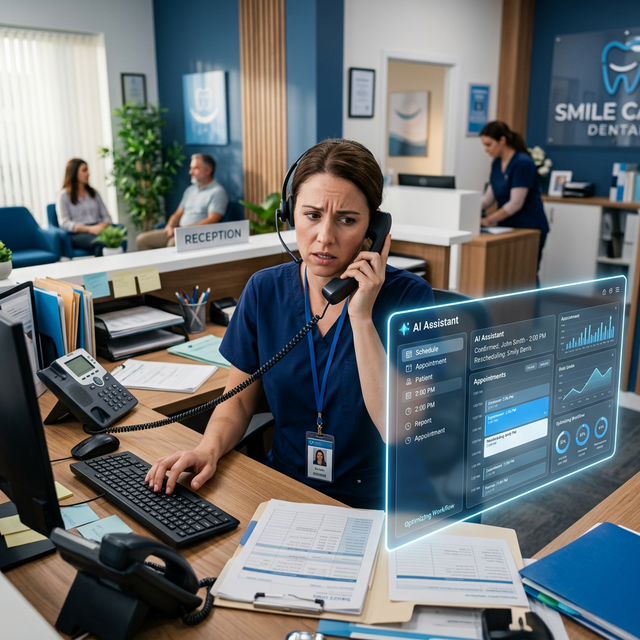
- Most current "AI hype" focuses on theoretical clinical tools, but practical AI is already here in communication.
- The front desk is the most immediate area for high ROI AI implementation.
- Clinical AI (diagnostics/imaging) is promising but still developing in reliability and adoption.
- Communication AI enables consistent booking and follow-up that manual bandwidth cannot match.
- Waiting for a "perfect" all-in-one AI system means missing out on today's measurable revenue.
Spend five minutes reading dental industry publications and you will encounter a lot of enthusiasm about artificial intelligence. AI for diagnostics. AI for treatment planning. AI for patient engagement. AI for everything.
Some of it is real. Some of it is several years away from being practical for a typical private practice. Knowing the difference matters when you are deciding where to invest.
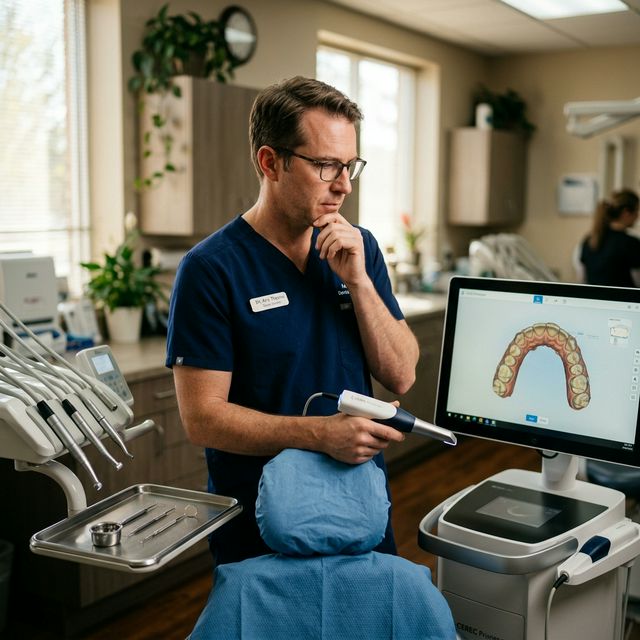
Separating theoretical hype from practical reality in dental AI.
What AI Can Do Right Now
The clearest, most immediately practical application of AI in dentistry today is communication. Specifically, handling the volume of phone calls, appointment bookings, reminders, and follow-ups that currently consume front desk time.
This is not theoretical. PatientXpress is operating in active dental practices today, handling inbound calls, booking appointments, making outbound follow-up calls, and flagging missed opportunities in real time. The technology works, the results are measurable, and the implementation timeline is weeks, not years.
What Is Still Developing
AI diagnostic imaging tools are genuinely promising but still require significant investment and integration work for most practices. AI treatment planning tools are in earlier stages. Voice-based clinical documentation is improving but not yet reliable enough for widespread adoption.
None of that means these tools will not be valuable. It means that for most practices evaluating AI today, the front desk and communication layer is where the return on investment is clearest and fastest.
Why Communication AI Is Different
Clinical AI requires validation, regulatory consideration, and a high threshold for accuracy. The stakes of a diagnostic error are high. Communication AI operates in a lower-stakes environment where the feedback loop is fast and the impact is immediately visible.
If an AI Dental Receptionist books an appointment that would have been missed, the value shows up on the schedule. If it follows up on a cancelled appointment and gets it rebooked, that is recoverable revenue that would otherwise have disappeared. You do not need a clinical trial to measure that.
The Honest Assessment
AI will transform dentistry in significant ways over the next decade. But practices that are waiting for the full picture before doing anything are leaving money on the table today.
The communication layer of your practice is ready for AI right now. PatientXpress is proof of that. The question is not whether AI works in dentistry. It is whether you are using it yet.
"The question is not whether AI works in dentistry. It is whether you are using it yet."
Ready to Implement AI That Works?
See how the PatientXpress AI Dental Receptionist can transform your practice's communication today.
Book a Walkthrough